In the fast-evolving digital era, independent artists and music producers have unprecedented tools at their fingertips to distribute, promote, and monetize their work. Whether you’re just starting or looking to scale your music career, choosing the right platforms can make or break your journey. Here are the 20 best music platforms for artists to help you unlock success in 2025
Table of Contents
The Benefits of Music Platforms for Independent Artists
With digital platforms, independent artists now can:
These benefits have disrupted the old model: artists no longer need a major label just to gain exposure.
How to Choose the Best Music Platforms
To pick the platforms that are right for you, consider:
Audience presence in your markets — Is the platform strong in your target countries?
Artist tools & analytics — Does it provide granular data (listener demographics, saves, skip rates)?
Royalty/revenue model — How much per stream or sale, and what’s the payout threshold?
Playlist/editorial access — Can you pitch songs or get featured?
Independent‑friendly policies — Can you retain rights, release on your own terms?
Fan engagement & monetization — Can fans tip, subscribe, buy merch, or join you directly?
Promotion & marketing features — Does the platform help promote new releases, run campaigns, or amplify reach?
A common strategy: pick a core set (distribution, streaming, direct‑to‑fan) and then layer in niche/promotional platforms.
The 20 Best Music Platforms for Artists (2025 Edition)
Below is a diversified mix of streaming services, distributors, promotional tools, and artist communities — each with unique strengths.
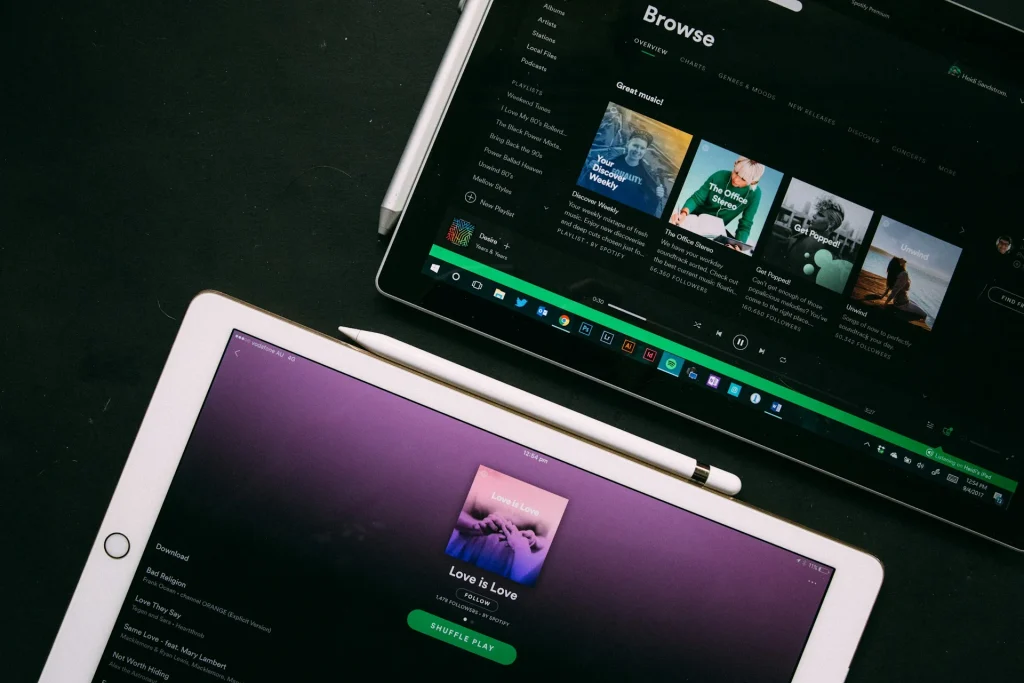
1. Spotify / Spotify for Artists
Spotify
One of the largest streaming platforms globally, with editorial playlists and algorithmic discovery.
You can pitch upcoming tracks to Spotify’s editorial team, view listener demographics, and monitor performance.
Many promotion services (including SoundCampaign) emphasize Spotify playlist placement.
On Spotify, placement in the right playlists can make or break a release. We recommend services that emphasize playlist outreach, editorial pitching, and audience matching to drive authentic streams and saves — helping your track move up algorithmic charts and reach listeners who’ll follow you long‑term.
2. TikTok / TikTok Music
TikTok is a powerful discovery engine — short video snippets of your song can go viral.
In 2025, the emerging TikTok Music app (or deeper integration) is making it easier for artists to monetize and stream directly.
Use TikTok for teasers, challenges, behind‑the-scenes to funnel listeners to full versions.
3. Apple Music / Apple Music for Artists
Unsplash
Offers analytics, listener trends, Shazam data integration, and global reach.
Strong for curated playlists (especially in markets like the U.S., Europe).
4. Amazon Music / Amazon Music for Artists
Benefit from Amazon’s ecosystem (Prime users, Alexa voice discovery) and deep user base.
Offers analytics and tools for independent musicians.
5. Soundcharts
More of a monitoring & analytics tool across multiple platforms (streaming, radio, social).
Useful for artists who want data to guide strategy and compare with peers.
6. SoundCloud
Favored by emerging and experimental artists — allows direct uploads, comments, reposts.
Good community for feedback, discovery, and niche genres.
7. YouTube / YouTube Music
Photo by Zulfugar Karimov
A dual platform: official songs + music videos + user content remixes.
YouTube Shorts & lyric videos can also drive streams and reach new fans.
8. TIDAL
High‑quality audio, strong artist payout policies, and Tidal Rising program spotlighting new artists.
9. Deezer
Operates in many markets, offers FLOW (personalized listening) and editorial playlist support.
10. Bandcamp
Great for direct‑to‑fan sales, merch, subscriptions.
Artists keep a large share of revenue.
11. Pandora
Particularly strong in the U.S.; algorithmic radio can help discovery.
Important in ad-supported streaming / radio hybrid models.
12. Anghami
Leading streaming service in the Middle East & North Africa (MENA).
Useful if your audience or growth is in those regions.
13. CD Baby
A distributor that places your music on many streaming services.
Also offers publishing administration, sync licensing, and sales reporting.
14. iHeartRadio
Radio + digital streaming hybrid.
Useful especially in U.S. markets for reach via radio networks.
15. ReverbNation
Offers tools for distribution, press kits, artist pages, and music promotion.
Good for managing your artist profile and fan engagement.
16. TuneCore
A full-service distributor: upload to major platforms, track sales, collect royalties, split with collaborators.
17. Amuse
Provides free distribution with optional upgrades (e.g. faster payouts, promotional support).
18. AWAL (Artists Without A Label)
A boutique “label alternative” that offers marketing, playlisting, advances, and distribution — while letting artists retain rights.
19. Ditto Music
Distributor + label services + publishing.
Offers features like immediate upload, royalty split, and promotional tools.
It helps you promote releases and funnel fans to streaming platforms.
The music industry in 2025 is more open than ever, but saturated too. The difference between getting heard and being buried often comes down to strategy, consistency, and leveraging the right platforms smartly.
You don’t need to be on all platforms choose the ones where your audience lives, and double down on platforms that give you analytics, monetization, and promotional power. Use a mix: streaming + distribution + fan direct + promotion tools.
Be analytical: monitor what’s working, reallocate efforts, and build your fanbase step by step.
FAQs About Music Platforms for Artists
What is the best music platform for artists?
There’s no one-size-fits-all. Many consider Spotify essential for discovery, while Bandcamp is great for direct revenue, and TikTok helps virality. The “best” is the one your fans use and that gives you control plus insights.
Which platforms pay artists the most?
Payments vary by geography, subscription type, and platform model. High-fidelity / premium services (like TIDAL) and direct-to-fan platforms tend to give higher margin
Do I need a distributor?
Yes, to get your music on major platforms like Spotify, Apple Music, Amazon, etc. Distributors like TuneCore, CD Baby, AWAL, Ditto help with that.
Verified Author
Written by
Mark A . Johnson
Mark A. Johnson is a social media growth strategist and content lead at BuyRealFollows.com. With over a decade of experience in platform research and digital marketing, he helps brands and creators build real audiences on Instagram, YouTube, TikTok, Facebook, and Spotify. His work focuses on algorithm analysis, engagement mechanics, and social proof strategy. Mark writes practical, research-backed guides to help readers grow their presence with confidence.
WHAT YOU'LL LEARN IN THIS GUIDEWhat separates a safe TikTok follower provider from one that risks your accountThe five criteria every reliable TikTok follower site must meet in 2026How BuyRealFollows,…
WHAT YOU'LL LEARN IN THIS GUIDEWhy your Facebook page has no engagement and what the algorithm actually prioritizes in 2026The four specific signals Facebook uses to decide which posts to…
WHAT YOU'LL LEARN IN THIS GUIDEWhy most bought TikTok views drop or disappear within days and what causes itThe specific signals TikTok uses to validate views as real versus artificialWhat…
WHAT YOU'LL LEARN IN THIS GUIDEThe real differences between Twicsy and BuyRealFollows across follower quality, pricing, and platform coverageHow Twicsy's three-tier follower system (High-quality, Active, VIP) compares to BuyRealFollows' approachWhich…
WHAT YOU'LL LEARN IN THIS GUIDEWhat SocialWick is and how it differs from BuyRealFollows in platform scope and pricingSocialWick's 15+ platform catalog versus BuyRealFollows' focused 5-platform modelA verified pricing comparison…